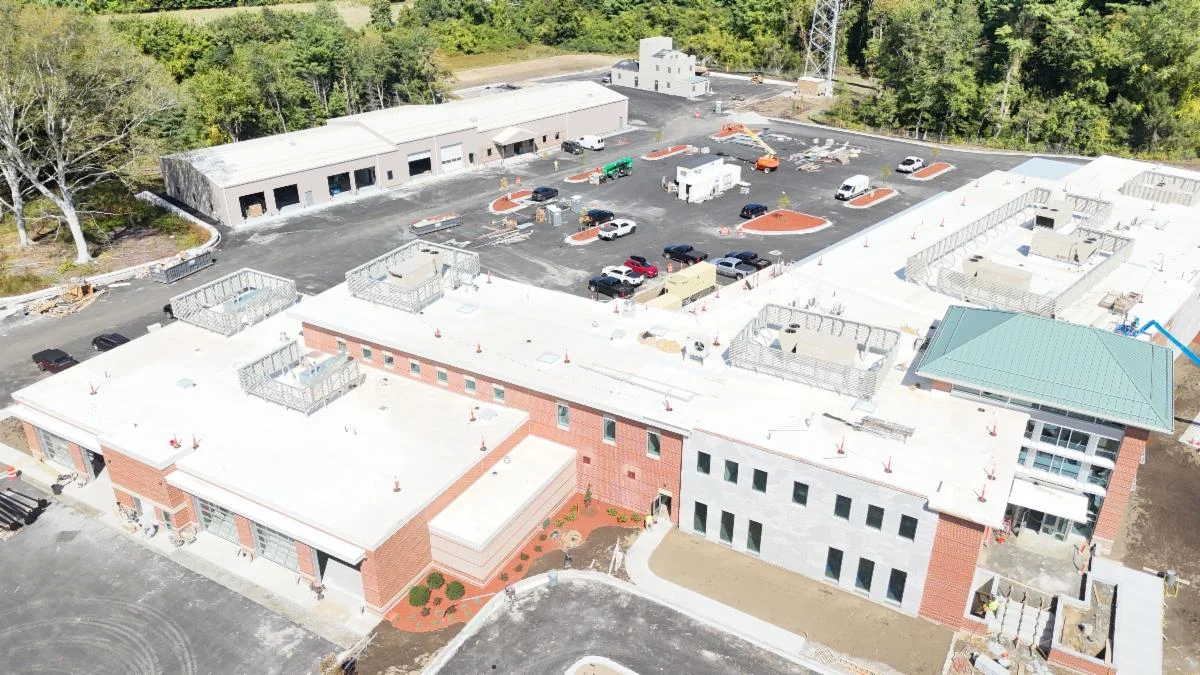
For government and public sector in the Newark area, the roof is rarely just a roof — it sits over operations that cannot simply stop. Commercial Roofers of New Jersey plans roof work around what is happening underneath it. What follows is a straight read on the work and the calls that go into it.
A Newark-area operation in government and public sector runs on uptime, so the roof has to be handled without stopping the work. When crews mobilize, how the interior is shielded, how rooftop equipment is managed, and how fast leaks get answered all follow from that.
We plan roof work around those uptime and access realities first. On an occupied property, the roof work has to be planned around people working underneath it. We name interior protection areas, staging limits, and the daily communication that keeps an occupied building running.
“One roof system for everything” rarely fits government and public sector. Buildings differ in membrane age, drainage, equipment load, and budget timing, so Commercial Roofers of New Jersey keeps each recommendation tied to the specific building rather than stamping a across the portfolio.
Ponding is a quiet killer on flat North Jersey roofs. Standing water after a storm points to drains that have lost pitch, sagging insulation, or a deck that has moved, and left alone it degrades the membrane and adds weight the structure was never meant to carry. We map where water sits before it becomes a leak.
Wind off the Newark Bay flats finds the perimeter first. Edge metal, coping, and the membrane attachment at the corners and eaves take the brunt of uplift, and once an edge lifts, a gust can peel a field that was otherwise sound. We treat the perimeter and corners as the make-or-break zones they are.
Commercial roofs in this area fail through repeated stress, not a single event, so we plan the work around the whole cycle — heat, cold, wind, water, and salt — instead of just the worst storm on the calendar.
There is no pitch up front — there is a roof walk. We look at the actual assembly and talk through the decision you are facing, whether that ends up being government and public sector or something else the roof needs, and you leave with a documented recommendation rather than a sales call.
Because most Newark and North Jersey buildings we work on stay open during the job, we schedule and stage around how the property actually operates and keep you informed at each step. What you are left with is a roof decision that lasts and an operation that kept moving the whole time.
Before we price anything, we put the roof condition and the recommendation in writing. Everything gets written down: the assembly we found, the conditions we photographed, the areas we protected, and the decision we are recommending. That record is what lets an owner approve work with confidence instead of guessing.
Written findings are what let an owner approve work with confidence. For government and public sector we document the assembly, the conditions, the access constraints, and the recommended option with photographs, so the decision can be defended to ownership, a lender, or an insurer without relying on anyone’s memory of a site visit.